
Initial Lessons from My First Experience in the Recording Studio
Twenty years later, I'm back in Atlanta, getting out of my comfort zone again.

On this week in 2005, I moved to Atlanta to start my first job as an assistant professor at Georgia Tech. Twenty years later, I returned to Atlanta to work on a completely different project. I’m right back where I like to be: just beyond the edge of my comfort zone, riding an exponential learning curve.
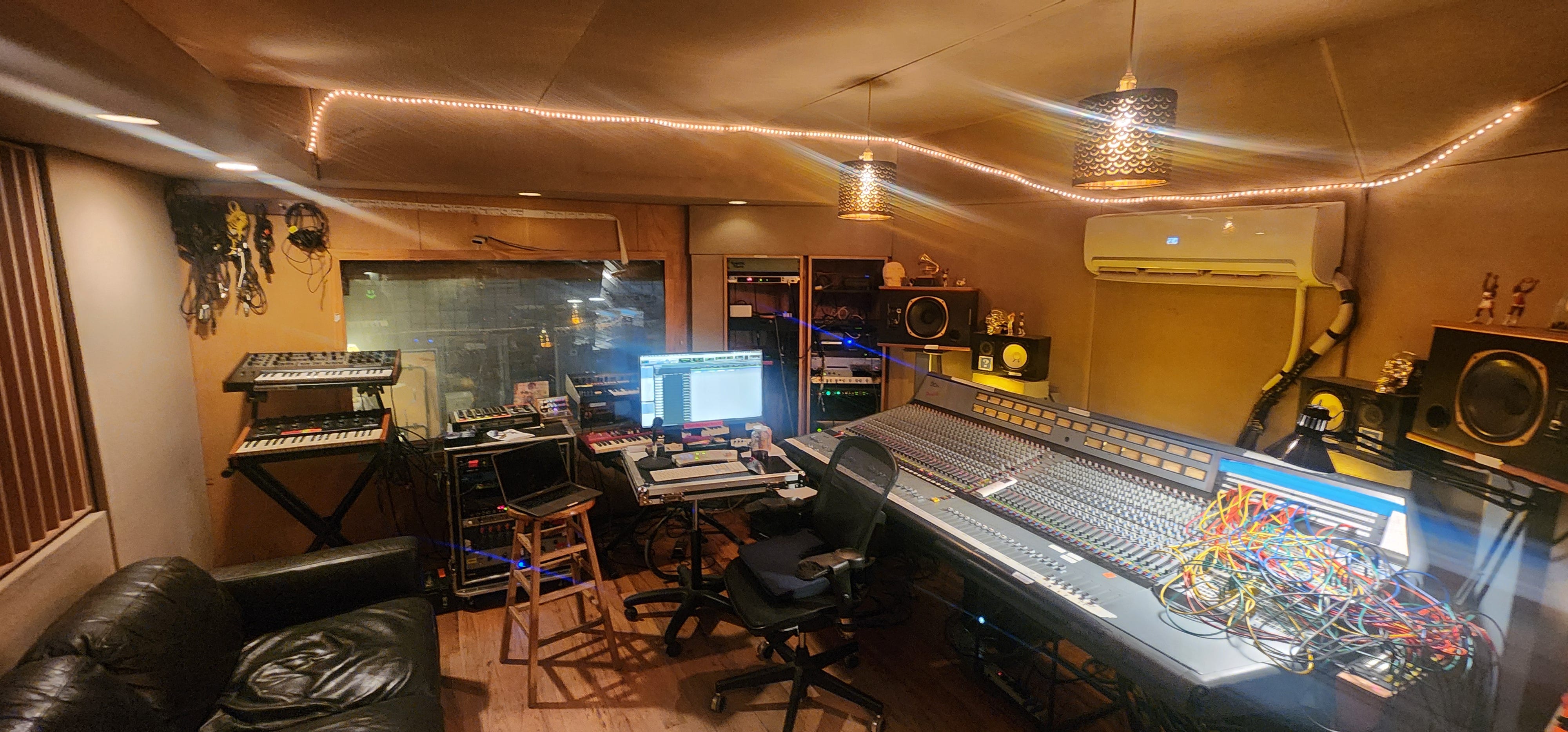
I spent a couple of days in the studio this week, working on my first professionally produced track. Here’s what I learned.
1. Get a chord chart on a grid.
I did this with MIDI over my demo track before going in, and it ended up saving hours. There will be many opportunities to re-track things with different arrangements - bass, synths, guitars - and this goes much faster if your producer knows the chords you’re using rather than figuring them out on the fly.
2. Know how to play your songs in different ways.
If you’re layering tracks, there will be countless opportunities to “paint” in the mix. A part that sat one way in your bedroom demo might need to breathe differently when there’s a live drummer pushing the energy.
3. Be flexible.
Some things will change. Having a complete song is critical - not because it’s necessarily “done,” but because it gives you a foundation to make small adjustments from. Sometimes we’d spend an hour or two on eight bars of just one track. (”How is this going to sound? Only one way to find out!”) This isn’t writing the song in studio. It’s being willing to experiment with what best brings out the emotion of what’s already written.
4. Basic music theory is critical.
Theory can be limiting if the rules pen you in, but in the studio, it’s essential because it gives you a common language. It lets you communicate efficiently with session musicians and your producer, and helps you understand why different layers work together.
5. Practice the new parts.
In pre-production, your producer may send back additional ideas - new riffs, alternate bass lines, different voicings. Practice playing anything you like, because you’ll likely be playing it yourself. In hindsight, I would have saved time if I’d practiced some of those parts on bass guitar before showing up.
6. Learn about production.
The goal isn’t necessarily to become a professional producer yourself. It’s to know what’s possible and speak the language. You don’t have to be an expert in compression, reverb, or EQ, but knowing what they do helps you communicate the sound you want.
7. More survives than you’d think.
Much more of the original composition survives the demo process than I expected, even though almost everything gets re-tracked.
8. There is no substitute for a human drummer.
Enough said. It’s good to go in with programmed tracks to give a feel for groove. We definitely also layered drum machine tracks over the human drummer, because that’s the sound I’m going for. But, nothing quite captures the energy like a live human drumming to a track you wrote.
I’ve always wanted to make music, and do it at a high level. Two years ago, I had not written a single song. How did I get here?
The same way I end up doing anything. Little by little. With consistency and focus, and a healthy dose of fearlessness. Approaching the practice with humility and curiosity. Not being afraid to be bad at first. Asking countless stupid questions. Surrounding myself with good, kind, generous people who are better than me at the craft and trying to learn from them as much as possible.
It’s all worth it. Because what a beautiful thing, to make something where there was once nothing.